
The Reinstatement Question Oregon Drivers Actually Face
You received a suspension notice from Oregon DMV. The letter says your license is suspended, but it doesn't clearly explain whether you need insurance right now, whether SR-22 applies to your situation, or what a hardship permit actually lets you do. You're trying to figure out if you can drive to work Monday or if you're grounded until you complete a multi-step process you don't fully understand yet.
Oregon's reinstatement process depends entirely on what triggered the suspension. DUII (Oregon's term for DUI) cases follow one pathway with mandatory SR-22 and ignition interlock requirements. Insurance lapse suspensions follow a different pathway with vehicle registration holds but often no SR-22. Points accumulation, unpaid tickets, and failure-to-appear cases each have their own rules. The structural confusion: Oregon DMV enforces both administrative suspensions (triggered automatically by violations like DUII refusal) and judicial suspensions (ordered by a court after conviction), and both can run concurrently after a single arrest.
Compare car insurance rates in your state
Get quotes from licensed carriers — no obligation, no spam, results in minutes.
Get Your Free QuoteOregon Base Reinstatement Fee
$75
This fee applies to most administrative suspensions. DUII-related revocations carry higher fees — often $100 or more — and require additional steps beyond the base reinstatement process. Unpaid fees block your ability to reinstate even after completing all other requirements.
Oregon DMV Driver and Motor Vehicle Services Division
What Actually Requires SR-22 in Oregon
Oregon does not require SR-22 for ordinary license suspensions. If your suspension stems from unpaid tickets, points accumulation, or failure to appear in court, SR-22 is not part of your reinstatement pathway. You need to resolve the underlying issue (pay the tickets, complete the required course, appear in court), pay the reinstatement fee, and your license is restored.
SR-22 is mandatory for DUII convictions, uninsured driving violations, and certain other serious offenses. Oregon Revised Code requires SR-22 financial responsibility filing for 3 years after a DUII conviction, measured from the conviction date. If your suspension letter specifically references DUII or financial responsibility requirements, SR-22 applies to your case. If it doesn't mention financial responsibility, SR-22 is likely not required.
Insurance lapse suspensions create a separate structural problem. Oregon DMV suspends vehicle registration when your insurer reports a policy cancellation. You cannot legally operate that vehicle until you provide proof of new coverage and pay the reinstatement fee, but this does not trigger an SR-22 requirement. The suspension targets the vehicle registration, not your driver license directly.
Oregon's implied consent suspension runs separately from any criminal DUII conviction — both must be resolved before full reinstatement, and each carries its own timeline and fees.
Oregon's DUII Diversion Hardship Pathway
Oregon's DUII Diversion Program (ORS 813.200 et seq.) allows first-time offenders to apply for a hardship permit after completing a 30-day hard suspension, contingent on diversion program enrollment and ignition interlock device installation. The hardship permit — Oregon calls it a Hardship Permit, not a restricted or occupational license — allows driving for essential purposes: employment, medical appointments, school, and essential household needs. Route and time restrictions are defined by DMV based on your stated need, and violations of those restrictions trigger immediate revocation.
The diversion pathway requires three simultaneous conditions before DMV will issue the permit: you must be formally enrolled in the DUII diversion program through the court, you must have an ignition interlock device installed in your vehicle by an approved Oregon IID vendor, and you must file SR-22 proof of insurance. Miss any one of those three and the hardship application is denied. The 30-day waiting period starts from the date of the administrative suspension, not the conviction date, so diversion-enrolled drivers often reach hardship eligibility faster than they expect.
Related Articles



Administrative vs Judicial Suspension Timing
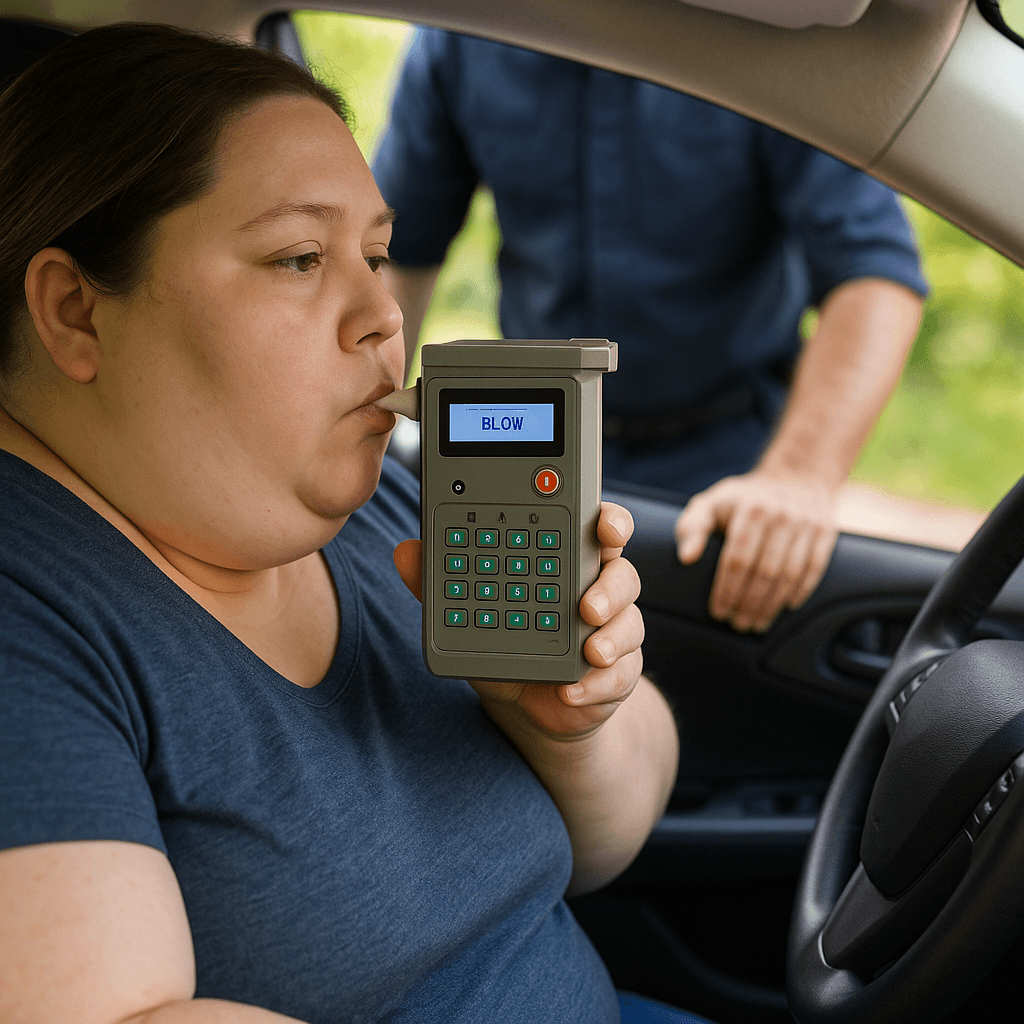
Oregon maintains two parallel suspension tracks after a DUII arrest. The administrative suspension is imposed by Oregon DMV under implied consent law (ORS 813.410) and begins automatically when you refuse a breath test or fail with a BAC of 0.08 or higher. A refusal triggers a 1-year administrative suspension; a BAC failure triggers a 90-day suspension. This happens regardless of whether you're convicted in criminal court.
The judicial suspension comes later, after your criminal case resolves. If you're convicted of DUII in court, the judge orders a separate suspension. Oregon DMV enforces both suspensions, and they can run concurrently or consecutively depending on timing. The structural blocker most drivers hit: they assume resolving the court case resolves the DMV suspension, but both must be addressed separately. You pay reinstatement fees twice — once for the administrative suspension, once for the judicial revocation — and the SR-22 requirement starts from the conviction date, not the earlier administrative suspension date.
Diversion enrollment affects only the judicial side. If you complete diversion successfully, the criminal charge is dismissed and you avoid the judicial suspension entirely. But the administrative suspension still ran its course. Drivers who refuse the breath test face the full 1-year administrative suspension even if they complete diversion, because refusal suspensions are not eligible for hardship permits during the first 30 days and carry no diversion benefit.
Oregon SR-22 Filing Duration
3 years
SR-22 must remain on file continuously for 3 years after a DUII conviction. If your policy lapses or you cancel coverage, your insurer reports the lapse to DMV and your license is re-suspended immediately. The 3-year clock does not pause during suspension — it runs from the conviction date regardless of when you actually reinstate.
ORS 4509.45, Oregon Financial Responsibility Requirements
Hardship Permit Restrictions and Compliance
Oregon's Hardship Permit is not a regular license with a label change. It carries specific route and time restrictions defined individually by DMV when the permit is issued. If your stated essential need is employment, DMV restricts your driving to the direct route between your home and workplace during the hours necessary for your shift. Medical appointments require advance documentation; school routes are similarly restricted. Driving outside those defined windows — even for another essential need — violates the permit terms and triggers automatic revocation.
Ignition interlock compliance is monitored continuously. Oregon's IID program requires monthly calibration appointments and compliance reporting. If you miss a calibration, attempt to start the vehicle with alcohol in your system, or tamper with the device, the IID vendor reports the violation to DMV. Two violations within the permit period typically result in revocation. The hardship permit does not survive IID removal — if you remove the device before your restriction period ends, your permit is revoked and you're back to full suspension.
Hardship permits in Oregon are not available to all suspension types. Drivers suspended as Habitual Traffic Offenders under ORS 809.600 face a 10-year revocation with extremely limited hardship eligibility. Points-based suspensions and unpaid-ticket suspensions generally do not qualify for hardship permits at all — Oregon reserves the hardship pathway primarily for DUII cases where the driver can demonstrate genuine essential need.
Non-Owner SR-22 for Drivers Without a Vehicle
If you don't own a vehicle but Oregon requires SR-22 for reinstatement, you need a non-owner SR-22 policy. This coverage provides liability protection when you drive vehicles you don't own — borrowed cars, rental cars, employer vehicles. It satisfies Oregon's SR-22 filing requirement without requiring you to insure a specific vehicle. Non-owner policies are significantly cheaper than standard auto policies because they cover the driver, not a titled vehicle, and they carry no collision or comprehensive coverage.
Non-owner SR-22 is common among suspended drivers who sold their vehicle after losing their license, or who relied on public transit and never owned a car. Oregon DMV does not require you to own a vehicle to reinstate your license, but if SR-22 is part of your reinstatement conditions, you must maintain continuous coverage for the full 3-year period. A non-owner policy fulfills that requirement. Carriers writing non-owner SR-22 in Oregon include Progressive, GEICO, and Dairyland. Expect monthly premiums in the range of $40–$70 for non-owner liability with SR-22 filing, though your actual rate depends on your driving history and the county where you live.
Your Next Step Toward Reinstatement
Start by confirming exactly what Oregon DMV requires for your specific suspension type. If your suspension letter references DUII or financial responsibility, SR-22 is mandatory — contact carriers that write SR-22 policies in Oregon and request quotes that include the filing. If your suspension stems from unpaid tickets or points, resolve the underlying violation first, then pay the reinstatement fee directly to DMV. Use Oregon DMV's online portal at oregon.gov/odot/dmv to check your eligibility status and outstanding requirements before you pay any fees or file paperwork.
If you're eligible for diversion and a hardship permit, enroll in the diversion program immediately and schedule ignition interlock installation before your 30-day hard suspension ends. The hardship application cannot move forward until both conditions are met. Compare SR-22 carriers now — getting coverage in place early prevents delays when you reach the hardship eligibility window. The reinstatement process is a sequence, not a single step, and the path forward depends entirely on matching your actions to Oregon's specific requirements for your suspension type.