
Your Carrier Cancelled — The Clock Started Yesterday
Your insurance company sent a cancellation notice and you need coverage before Oregon DMV suspends your vehicle registration. The state's electronic insurance verification system reports your lapse to the DMV automatically — no grace period, no warning letter before the carrier files. You have days, not weeks, before the suspension notice arrives and your registration becomes invalid.
Oregon requires continuous liability coverage for all registered vehicles under ORS 806.010. When your carrier cancels and reports the lapse through the Oregon Insurance Reporting System, DMV suspends your registration and mails a notice. You cannot legally drive the vehicle until you provide proof of new coverage and pay the reinstatement fee. The question is not whether you need insurance — it is which carrier will write you after a cancellation, and how fast you can bind coverage before the suspension becomes official.
Compare car insurance rates in your state
Get quotes from licensed carriers — no obligation, no spam, results in minutes.
Get Your Free QuoteOregon Registration Reinstatement Fee
$75
Oregon DMV charges a $75 fee to restore suspended registration after a confirmed insurance lapse, separate from any new policy premium. This fee is required even if you secure new coverage the same day the cancellation is reported.
ORS Chapter 806, Oregon DMV fee schedule
Why Your Policy Was Cancelled and What That Signals to Carriers
Non-payment is the most common cancellation trigger. You missed a payment, the carrier gave you the statutory minimum notice period, and they terminated the policy. Oregon law requires carriers to provide notice before cancellation, but once that window closes, the cancellation is reported to DMV electronically and immediately. Non-payment cancellations flag you as higher financial risk to the next carrier.
Material misrepresentation on your application — understating mileage, omitting a household driver, or failing to disclose a recent violation — triggers immediate cancellation for fraud. These cancellations are harder to overcome because they signal dishonesty, not just payment problems. Some carriers will not quote you at all after a misrepresentation cancellation; others will write you but only in their highest-risk tier.
Underwriting re-evaluation after a claim or violation discovery also produces mid-term cancellations. Your carrier ran your motor vehicle report at renewal, found a DUI or multiple at-fault accidents you did not disclose, and decided you exceed their risk appetite. This is not fraud — it is risk re-assessment — but it still puts you in the non-standard market for your next policy.
Oregon DMV does not care why your carrier cancelled. The electronic lapse report triggers registration suspension automatically, and the $75 reinstatement fee applies regardless of fault.
Carriers That Write Post-Cancellation Risk in Oregon

Bristol West writes high-risk Oregon drivers including those with recent cancellations for non-payment or violations. They operate in the non-standard tier and offer online quotes, but most policies require broker placement because underwriting is manual after cancellation. Bristol West will ask for the cancellation reason and the date — be prepared to explain both. Dairyland and GAINSCO also write post-cancellation risk in Oregon and specialize in drivers standard carriers reject. Both offer SR-22 filing if your cancellation was tied to a DUII or uninsured driving charge that triggered a state filing requirement.
The General and Progressive's non-standard division write cancellation risk but price aggressively based on the trigger. If your cancellation was non-payment only with no underlying violations, Progressive may offer a competitive rate. If the cancellation followed a DUII discovery or multiple claims, expect quotes in the $180–$240/month range for state minimum liability. Non-owner SR-22 policies are an option if you no longer own the cancelled vehicle but need continuous coverage to satisfy a filing requirement or avoid future lapses on your record.
Related Articles





How to Compare Quotes Without Wasting Time on Carriers That Will Decline You
Start with carriers confirmed to write post-cancellation risk in Oregon: Bristol West, Dairyland, GAINSCO, The General, and Progressive's non-standard tier. Do not waste time requesting quotes from Amica, USAA preferred tier, or State Farm if your cancellation was within the past 90 days — they will soft-decline or quote you so high the rate is effectively a rejection.
When you request a quote, you will be asked the cancellation date and reason. Answer accurately. Carriers verify this information against your CLUE report and Oregon DMV record. If you misrepresent the cancellation reason to get a lower quote, the new carrier will discover it at binding or within the first 60 days and cancel you again — now you have two cancellations on your record and even fewer carrier options.
Expect to provide proof of new coverage to Oregon DMV within 10 days of binding the policy if a suspension notice has already been issued. The new carrier will file an SR-22 automatically if your cancellation triggered a state filing requirement. If no filing is required, the carrier reports the new policy to DMV through the same electronic system that reported your lapse, and DMV lifts the suspension once they verify continuous coverage going forward and receive your $75 reinstatement fee.
Carrier-to-DMV Electronic Reporting Window
1–5 business days
Oregon insurers must report policy cancellations to DMV through the Oregon Insurance Reporting System within this window. Once reported, DMV processes the suspension and mails notice to the registered owner, usually within 7–10 days total from cancellation date.
ORS 806.010, Oregon electronic insurance verification system
What Happens If You Drive on a Suspended Registration
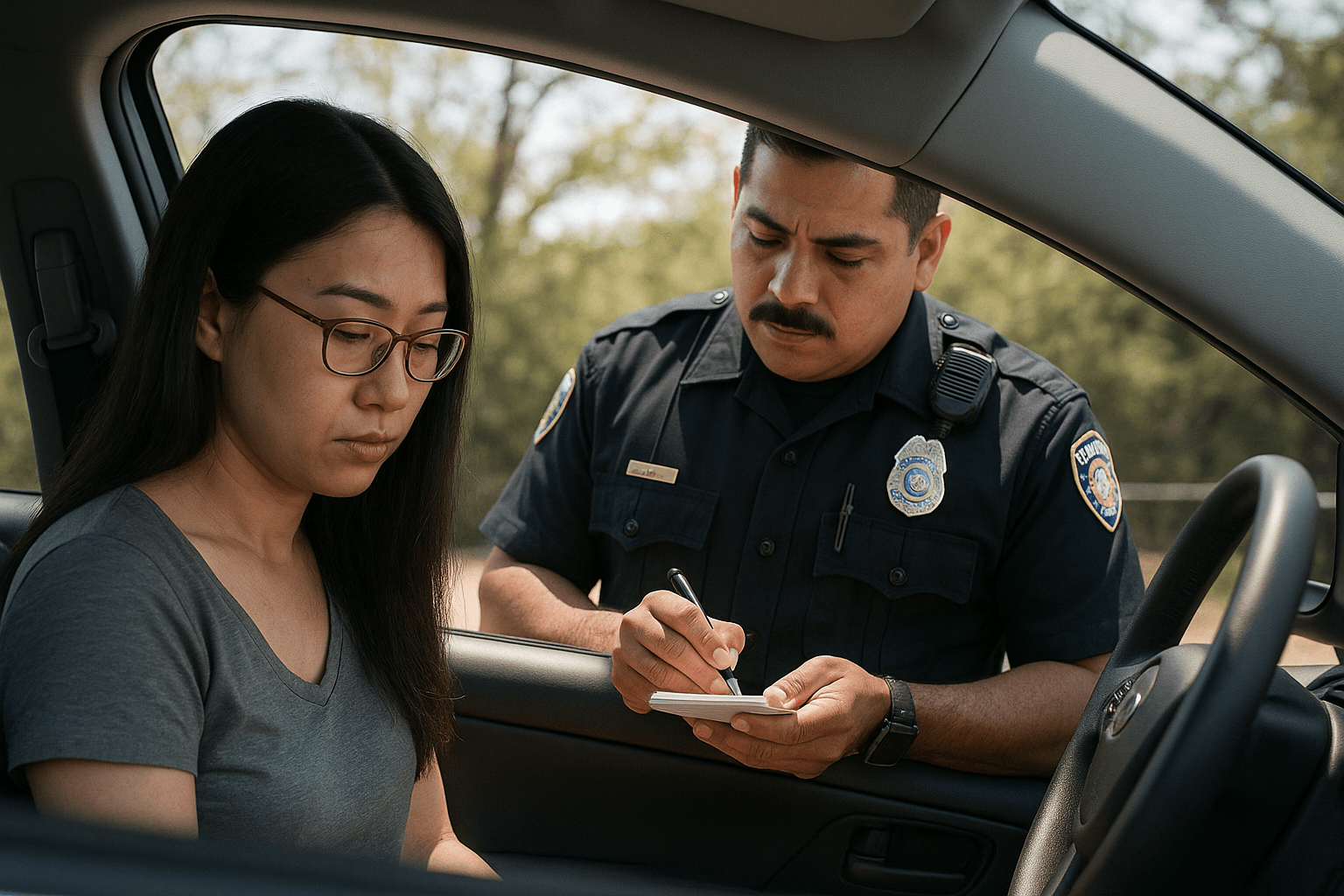
Operating a vehicle with suspended registration is a Class B traffic violation in Oregon. If stopped, you face a fine, potential vehicle impoundment, and a new violation on your driving record that makes your insurance situation worse. The officer will verify your registration status electronically — you cannot talk your way out of it by claiming you did not receive the suspension notice.
If you are stopped and cannot provide proof of insurance, you face a separate charge for driving uninsured under ORS 806.010, which carries a fine and extends the suspension period. Oregon does not treat these as minor paperwork violations — they are treated as knowing disregard of financial responsibility law, and repeat offenses escalate quickly to criminal misdemeanor charges.
Get Quoted, Bind Coverage, and Clear the Suspension in One Day
You can complete the entire process in a single day if you act immediately. Request quotes from Bristol West, Dairyland, GAINSCO, and The General this morning. Choose the lowest rate that meets Oregon's minimum liability limits: $25,000 per person, $50,000 per accident for bodily injury, and $20,000 for property damage. Bind the policy, pay the first month, and request proof of insurance. The carrier reports your new coverage to DMV electronically within 1–5 business days, but you can submit your proof of insurance and $75 reinstatement fee to DMV immediately by mail or in person to accelerate the suspension lift. Compare carriers writing your risk profile and driving history now — waiting only increases the chance DMV processes the suspension before you secure new coverage.