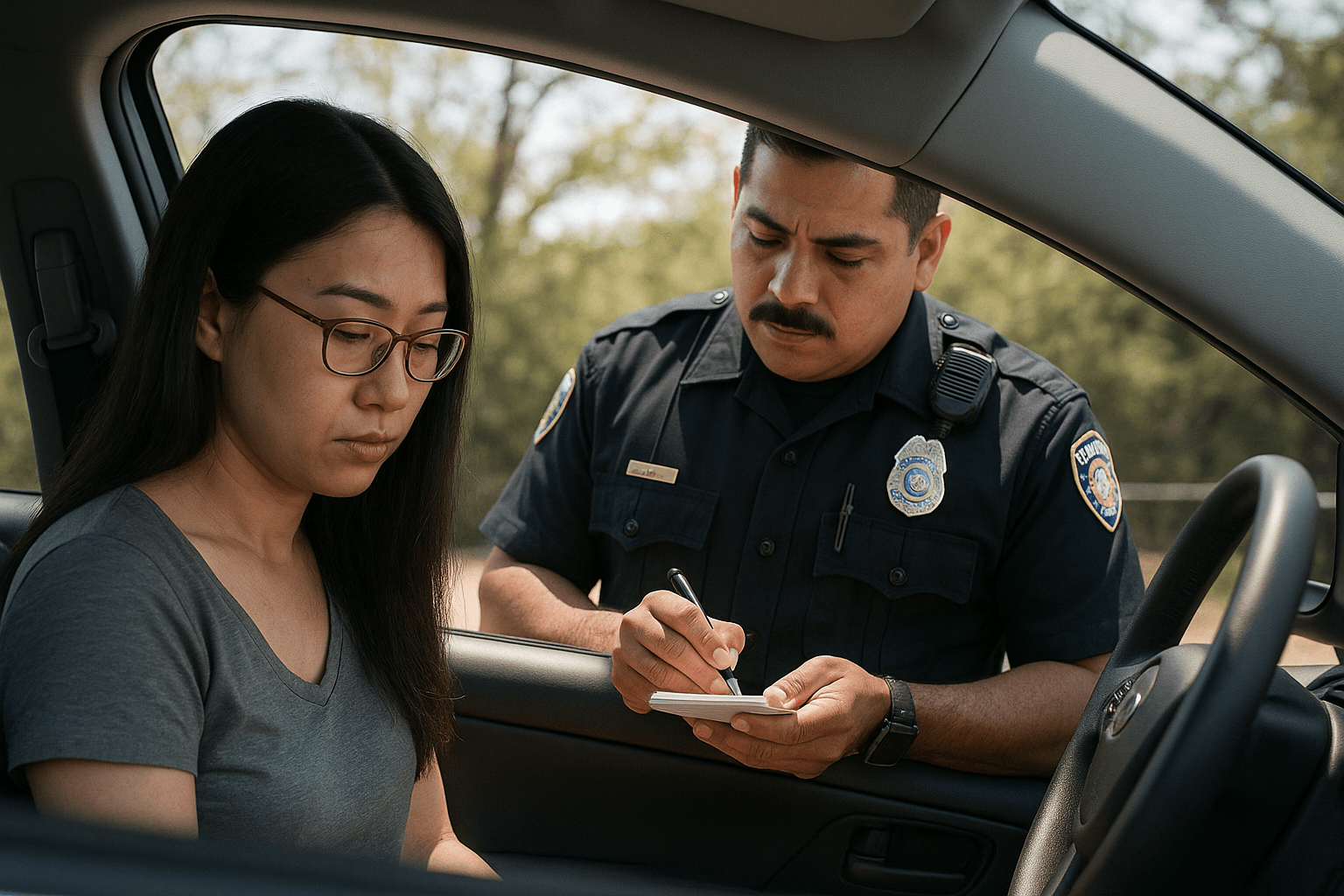
The Citation That Triggers Both Suspension and Filing
You were cited for driving without insurance in Oregon — ORS 806.010 makes operating an uninsured vehicle unlawful, and the Oregon DMV has already sent notice of pending registration suspension. Your employer needs you on the road Monday, you assumed SR-22 was only required after a DUII, and now you're stuck between a suspended license and carriers who won't return your quote requests. The uninsured driving citation in Oregon triggers two separate consequences that run on different timelines: DMV registration suspension (which can strand your vehicle immediately) and a mandatory SR-22 filing requirement (which gates reinstatement even after you've paid the fine).
This is not a DUII case. You did not refuse a breath test. You were simply caught driving without active liability coverage, which Oregon treats as a serious administrative offense requiring proof of future financial responsibility. The SR-22 filing Oregon requires is a 1-year commitment, the reinstatement process costs $85 before you add the premium increase, and most standard-tier carriers (State Farm, Allstate, GEICO standard underwriting) will decline to quote you until the filing period ends. You need coverage that writes SR-22 in Oregon, prices the risk honestly, and gets the filing to the DMV within the window that keeps your suspension from extending.
Compare car insurance rates in your state
Get quotes from licensed carriers — no obligation, no spam, results in minutes.
Get Your Free QuoteOregon Uninsured Driving Reinstatement Fee
$85
This is the base fee to restore your registration after an uninsured driving suspension in Oregon. It does not include the SR-22 filing fee (set by your carrier, typically $15–$35 one-time) or the premium increase you'll face in the non-standard tier.
ORS 806.070; Oregon DMV reinstatement fee schedule
Why Oregon Requires SR-22 for Uninsured Driving
Oregon law requires continuous liability coverage for any registered vehicle — ORS 806.010. When you're cited for driving uninsured, Oregon DMV does not simply fine you and move on; the state suspends your vehicle registration and requires you to prove future financial responsibility by maintaining an SR-22 filing for 1 year from the reinstatement date. The SR-22 is not insurance itself. It is a form your carrier files electronically with the Oregon DMV certifying that you carry at least state minimum liability coverage: $25,000 bodily injury per person, $50,000 per accident, $20,000 property damage, plus Oregon's required PIP and uninsured motorist coverage.
The filing period begins the day your carrier submits the SR-22 to the DMV, not the day of your citation. If your policy lapses at any point during the 1-year filing period — even by one day — your carrier is required to notify the DMV electronically within 10 days, and Oregon will suspend your registration again immediately. You start the 1-year clock over. This lapse-to-suspension cycle is the most common failure mode for Oregon drivers with SR-22 requirements: they assume the filing is a one-time document, let the policy lapse to switch carriers or save money, and discover their registration has been suspended again without warning.
Oregon uses an electronic insurance verification system (Oregon Insurance Reporting System) that monitors SR-22 filings in real time. Carriers report policy cancellations and new policies automatically. There is no grace period between lapse notification and DMV action. The administrative processing lag between your carrier's report and the DMV notice to you is typically 5–10 business days, but the suspension is effective the day the lapse is reported. By the time you receive the notice, your registration is already suspended.
Your SR-22 filing must remain active for 1 full year without a single lapse — even one missed payment restarts the entire filing period from zero.
How to Get SR-22 Coverage in Oregon After an Uninsured Citation

Start with non-standard carriers that explicitly write SR-22 business in Oregon: Bristol West, Dairyland, GAINSCO, GEICO non-standard division, Progressive non-standard, The General, and National General all file SR-22 in Oregon and quote drivers with recent uninsured citations. Request quotes from at least three carriers — premium variation in the non-standard tier is wide, and the cheapest quote today may not be the cheapest at renewal. Each carrier prices uninsured driving risk differently; some treat it as equivalent to a minor at-fault accident, others price it closer to reckless driving. When you request a quote, state explicitly that you need SR-22 filing and provide the citation date and the current status of your registration suspension.
The SR-22 filing itself is a small one-time fee set by your carrier — typically $15–$35 in Oregon. The premium increase is the real cost. Non-standard tier monthly premiums for Oregon drivers with uninsured citations typically range from $90 to $160 per month for state minimum liability, depending on your age, county, vehicle, and whether you carry any other violations on your driving record. If you do not currently own a vehicle, request a non-owner SR-22 policy — this satisfies the Oregon DMV SR-22 requirement without insuring a specific car, and premiums are typically 20–30% lower than owner policies because the carrier is not covering collision or comprehensive risk.
Related Articles





The Oregon Reinstatement Process After Uninsured Driving
Oregon DMV will not reinstate your registration until you complete three steps in sequence: pay the $85 reinstatement fee, provide proof that all fines and penalties related to the citation have been resolved, and maintain an active SR-22 filing on file with the DMV. You cannot skip steps or reverse the order. If you file the SR-22 before paying the reinstatement fee, the DMV will not process your reinstatement. If you pay the fee but your SR-22 lapses a week later, your registration is suspended again and you pay the $85 fee a second time.
Most Oregon drivers reinstate by mail or in person at a DMV field office. Online reinstatement is available only for certain suspension types — uninsured driving suspensions typically require mail or in-person processing because the DMV must verify that your SR-22 filing is active in the state's electronic reporting system before clearing the suspension. Processing time is typically 5–10 business days from the date the DMV receives your reinstatement fee and documentation. If you need to drive immediately, apply for a Hardship Permit while your reinstatement processes — Oregon allows hardship permits for employment, medical, education, and essential household needs, and the permit is valid during the reinstatement processing window if you meet eligibility criteria.
Oregon's Hardship Permit program requires proof of essential need, an SR-22 filing, and ignition interlock device installation if your suspension is DUII-related. For uninsured driving suspensions, the IID requirement does not apply unless you also have a separate DUII offense. The hardship application fee and approval timeline vary by suspension type — verify current requirements with Oregon DMV before applying.
Oregon SR-22 Filing Period After Uninsured Driving
1 year
Your SR-22 filing must remain active for 1 full year from the date of reinstatement, not from the citation date. If your policy lapses at any point during that year, the filing period resets to zero and you start the 1-year clock over.
Oregon DMV SR-22 filing requirements
What Happens If Your SR-22 Lapses During the Filing Period
If you miss a payment, cancel your policy to switch carriers, or let your coverage lapse for any reason during the 1-year SR-22 filing period, your carrier is required by Oregon law to notify the DMV electronically within 10 days. The DMV suspends your registration immediately — no warning, no grace period, no opportunity to cure the lapse before suspension takes effect. The suspension notice arrives in the mail 5–10 business days after the lapse is reported, but the suspension itself is effective the day your carrier files the lapse notification. By the time you receive the letter, you are already driving on a suspended registration.
To reinstate after an SR-22 lapse, you must obtain a new SR-22 filing from a carrier, pay the $85 reinstatement fee a second time, and restart the 1-year filing period from zero. If you lapse twice in the same year, you pay the reinstatement fee twice and extend your total SR-22 obligation by an additional year. Oregon does not prorate or credit time served. The filing period is measured from the most recent reinstatement date, not the original citation.
The most common lapse scenario: a driver switches carriers mid-year to save money, the old carrier cancels the policy and reports the lapse to the DMV, and the new carrier's SR-22 filing does not reach the DMV until 3–5 days later. Even a 24-hour gap between the old policy's cancellation and the new policy's SR-22 filing triggers a suspension. To avoid this, request that your new carrier file the SR-22 with the DMV before you cancel your old policy, then cancel the old policy the same day the new SR-22 appears in the Oregon DMV system. Call the DMV to confirm the new filing is on record before canceling the old policy.
Compare SR-22 Carriers Writing in Oregon
Non-standard premiums vary widely by carrier, and the cheapest option at initial quote may not be the cheapest at renewal. Oregon SR-22 drivers who compare at least three carriers save an average of $40–$70 per month compared to drivers who accept the first quote. Carriers that write SR-22 business in Oregon and actively quote uninsured driving cases include Bristol West, Dairyland, GAINSCO, GEICO non-standard, Progressive non-standard, The General, National General, and Kemper. State Farm and USAA write SR-22 filings for existing policyholders but typically decline new business for drivers with active uninsured citations.
Request quotes that include the SR-22 filing fee separately so you can compare premium-only pricing across carriers. Some carriers bundle the filing fee into the first month's premium; others charge it separately. Ask each carrier whether they offer payment plans that avoid lapse risk — monthly Electronic Funds Transfer (EFT) plans reduce the chance of a missed payment compared to manual monthly payments, and some carriers discount premiums for EFT enrollment. Verify that each quote includes Oregon's required PIP and uninsured motorist coverage — state minimums are not optional, and quotes that exclude them are not valid.